
in search of kn/own/ables
Media Images
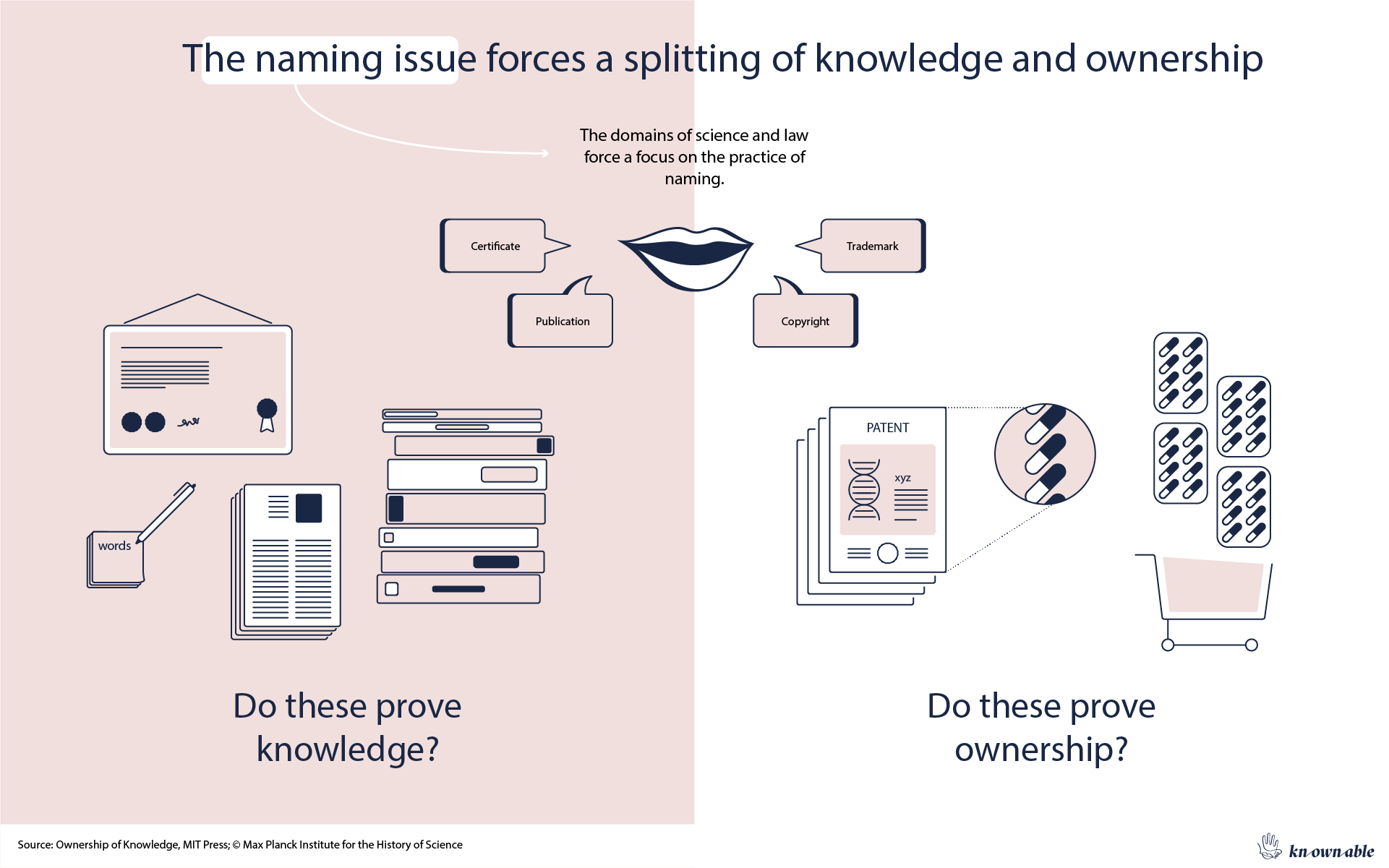
A focus on naming splits knowledge and ownership, e.g., through certificates, trademarks, and publications.
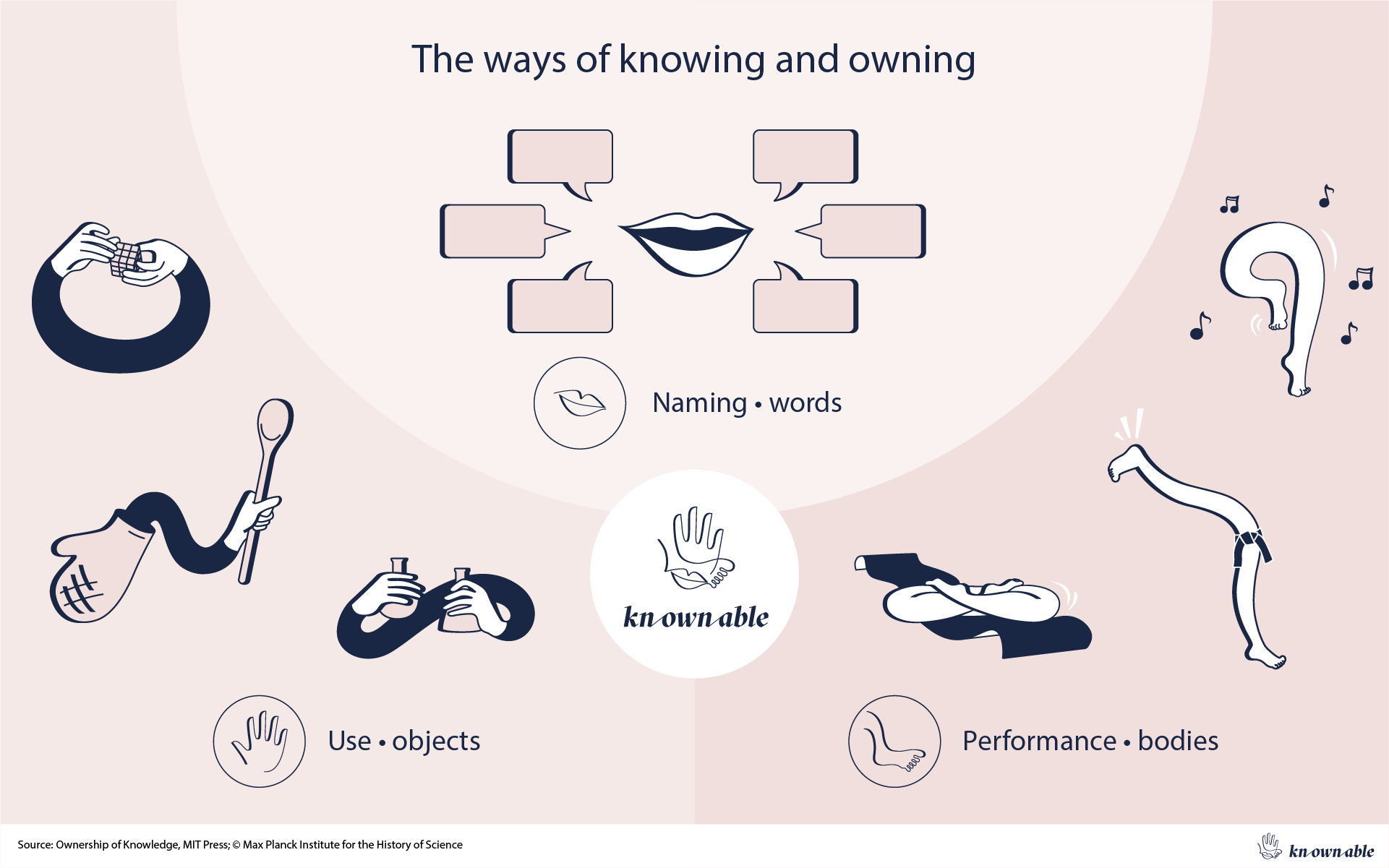
How knowing and owning occur through performance (e.g., of bodies), use (e.g., of objects), and naming (through words). All three together are the kn/own/able, combining knowing and owning.
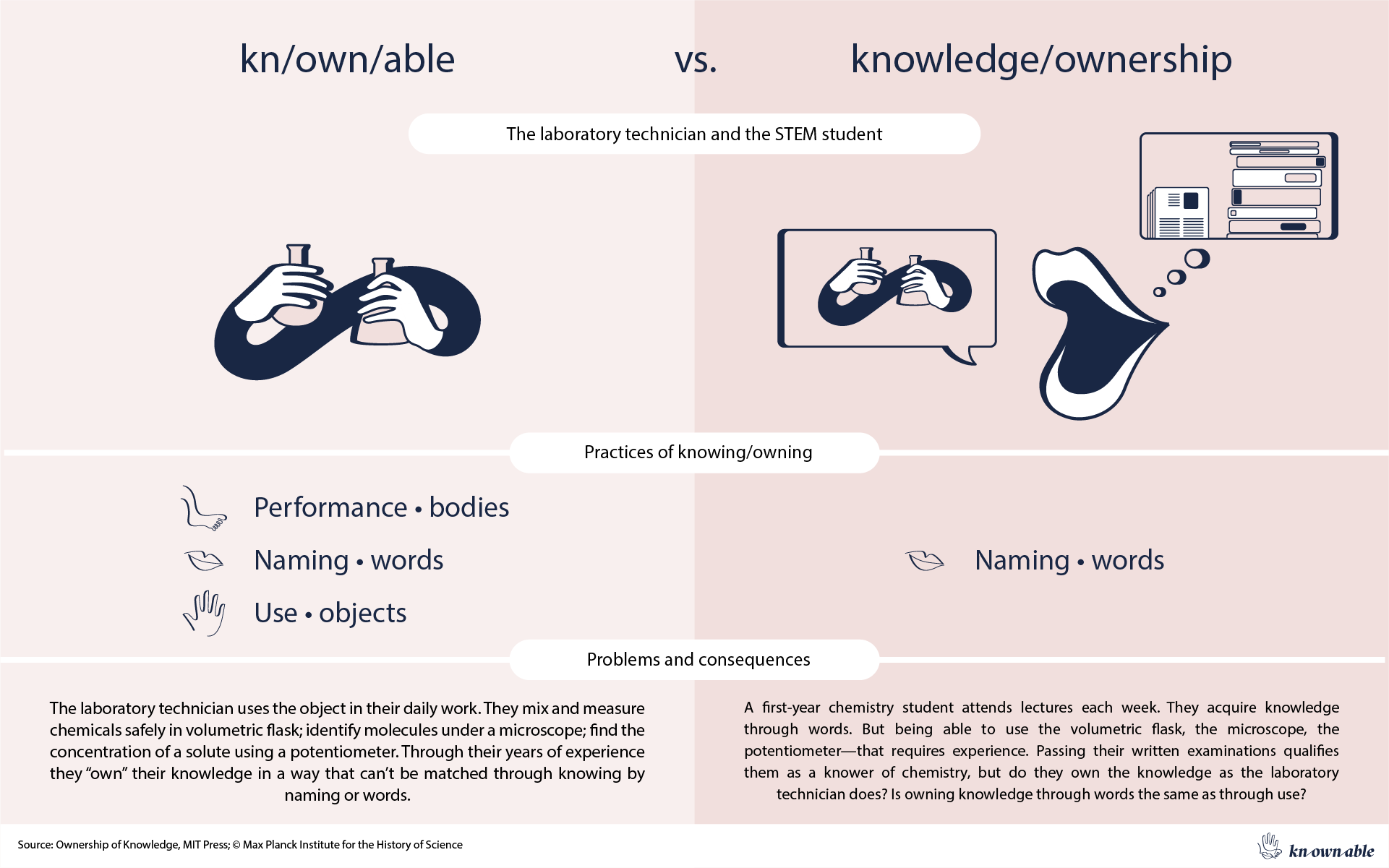
Case study 1: a laboratory technician has knowledge ownership through performance, use, and naming (kn/own/able), while a STEM science student only learns through naming.
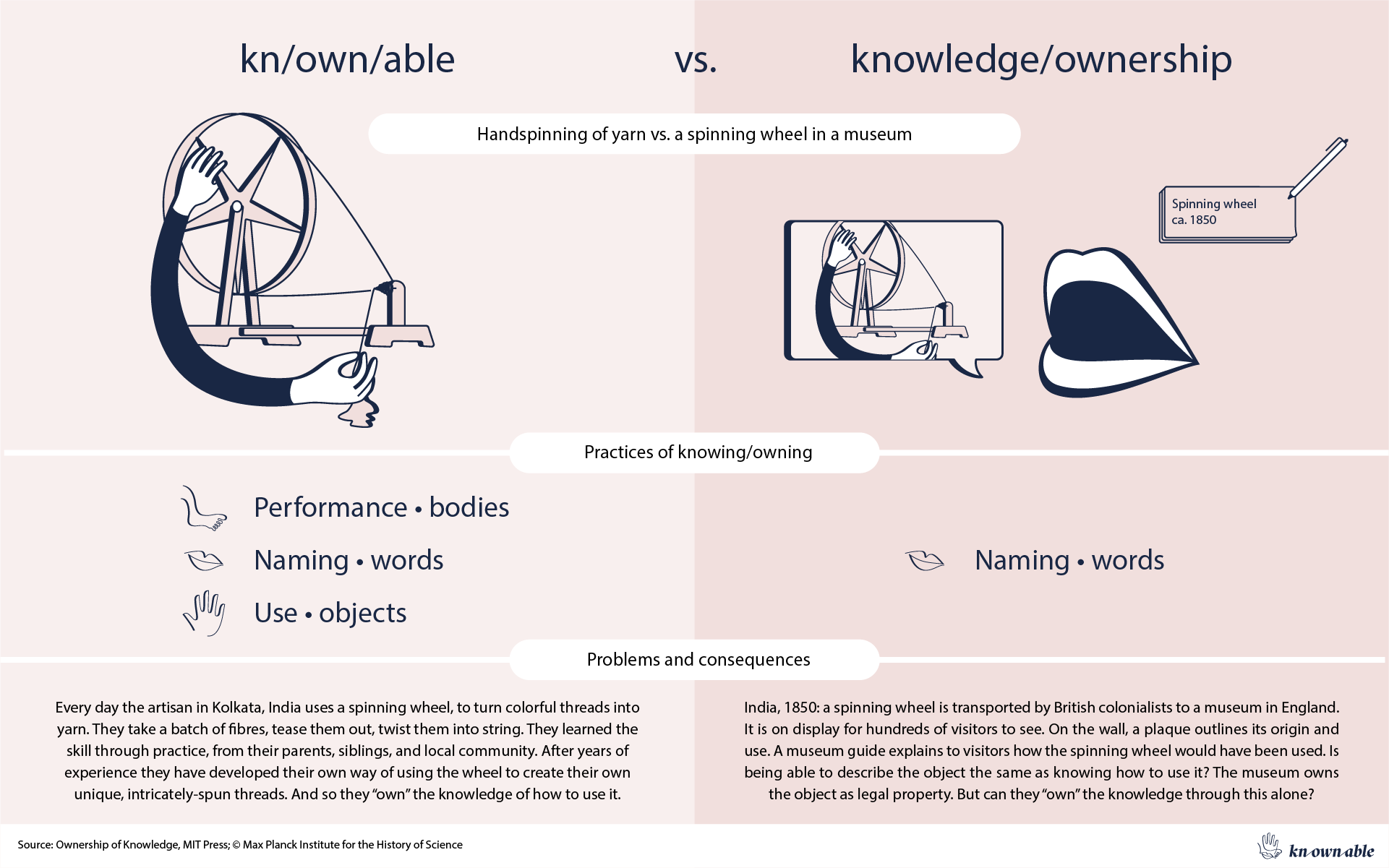
Case study 2: someone handspinning yarn has knowledge ownership through performance (of the body), use (of the spinning wheel), and naming (through describing the process), while the spinning wheel in the museum can only be named (through description).
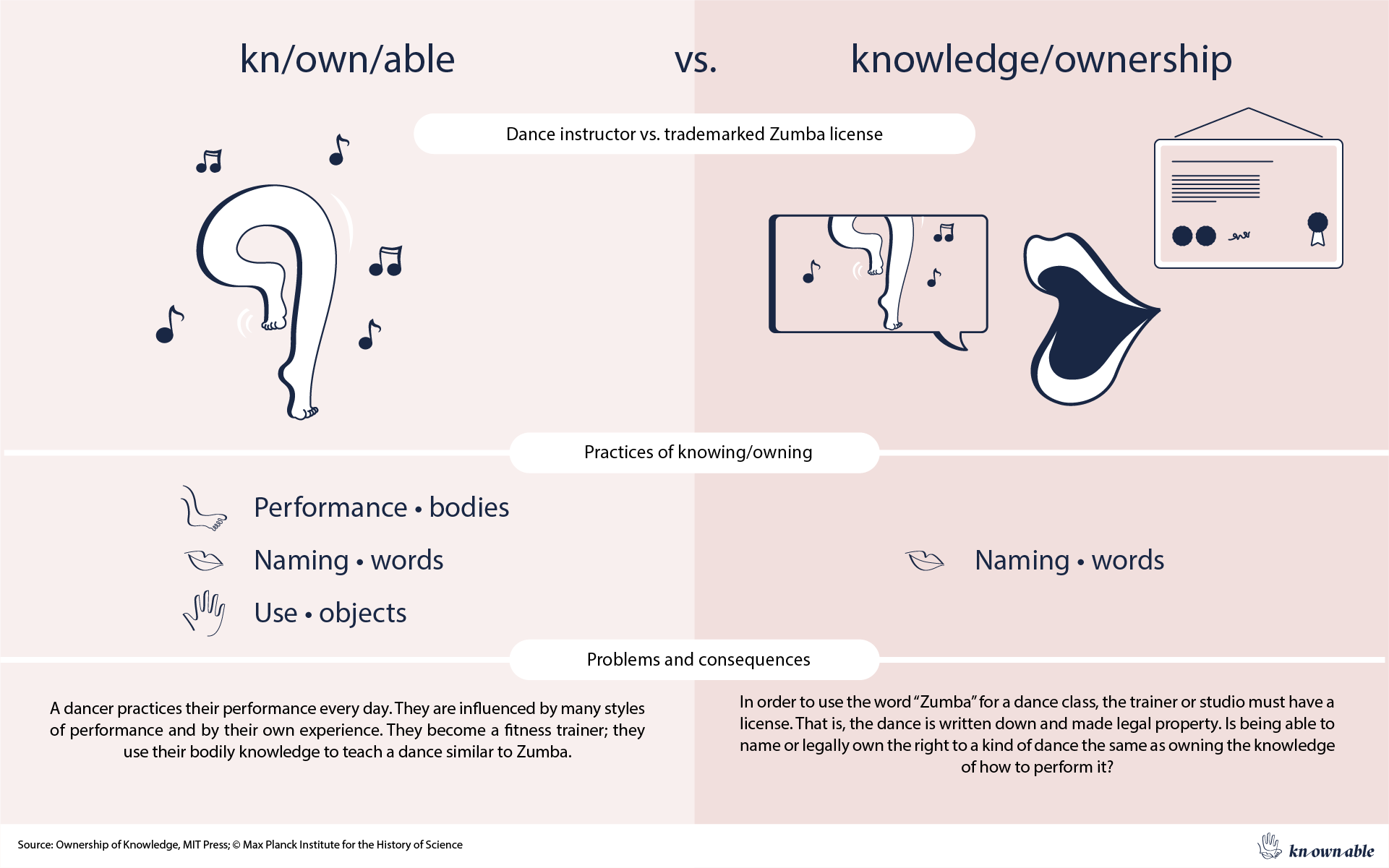
Case study 3: A dance instructor has knowledge ownership through performance (of the body), use (of e.g., dancing shoes), and naming (through describing the process) while a Zumba license trademarks the dance through naming, splitting knowledge from ownership.
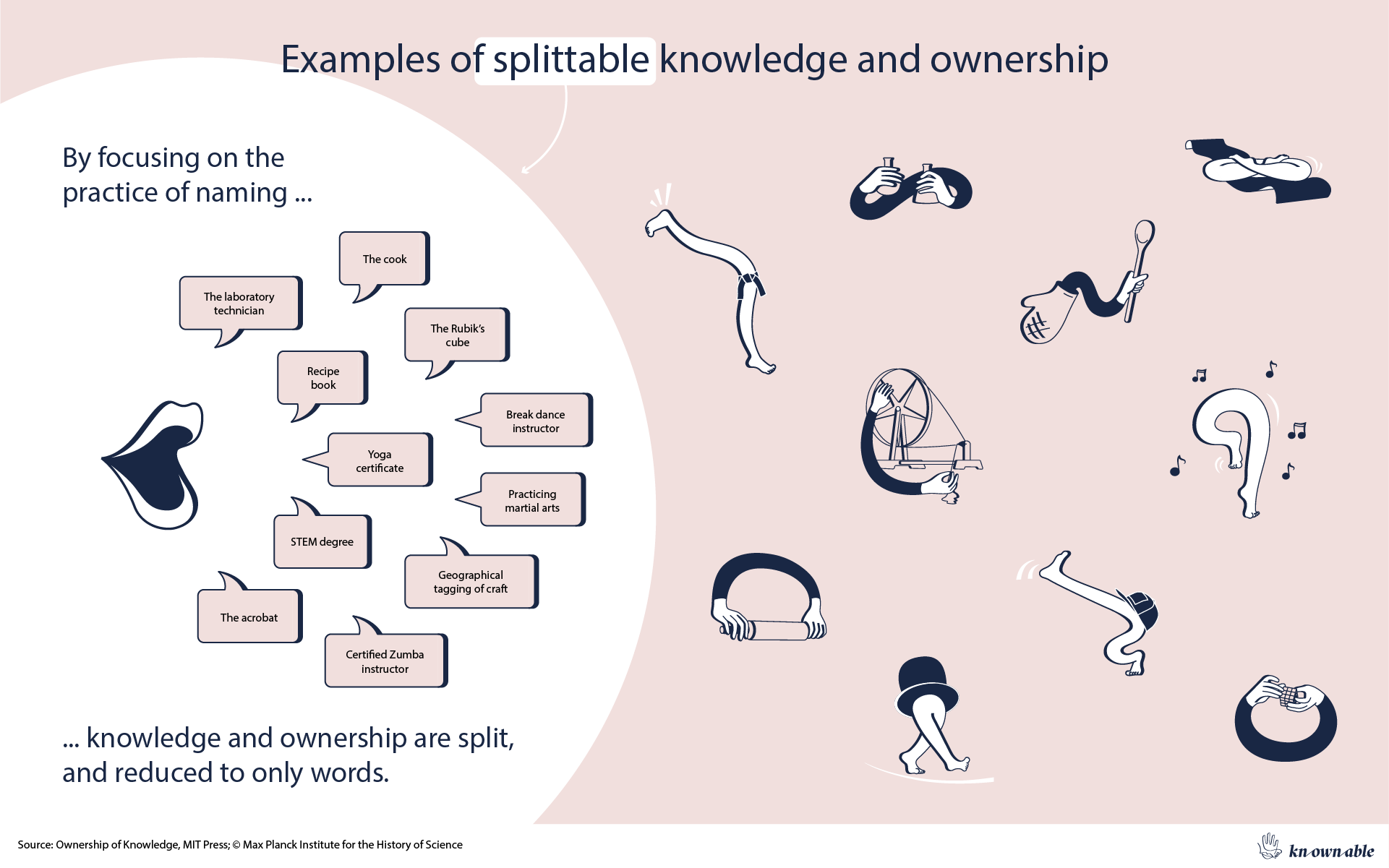
Further examples show how focusing on the practice of naming, knowledge and ownership are split, and reduced only to words. For example cooking, excercising, or solving a Rubik’s cube.
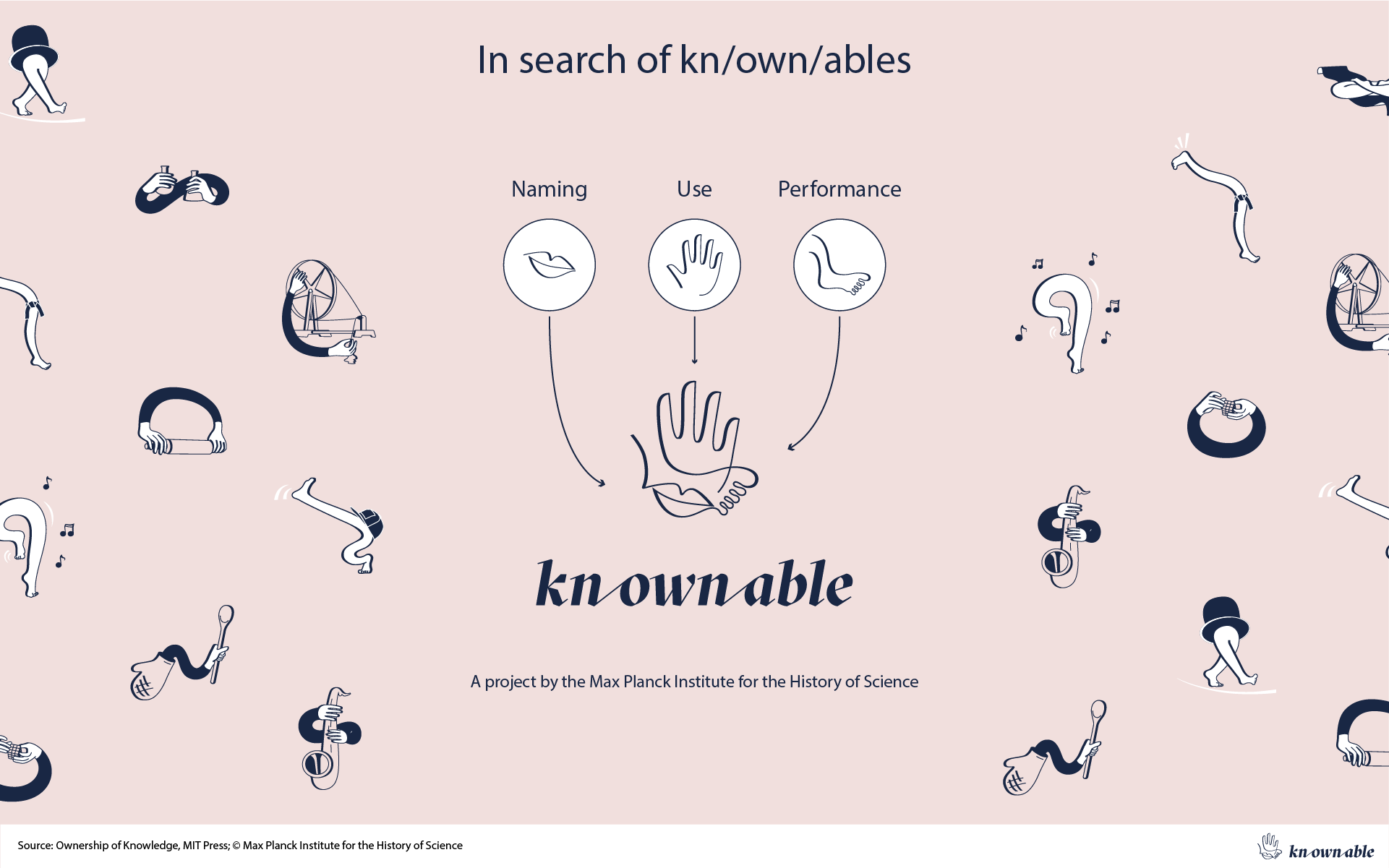
To repair this we need to explore how knowledge and ownership are mutually conditioning, through performance, naming, and use: the kn/own/able.
Design by dga*designs for changemakers.