
Intellectual Property with Chinese Characteristics
By Cynthia Brokaw
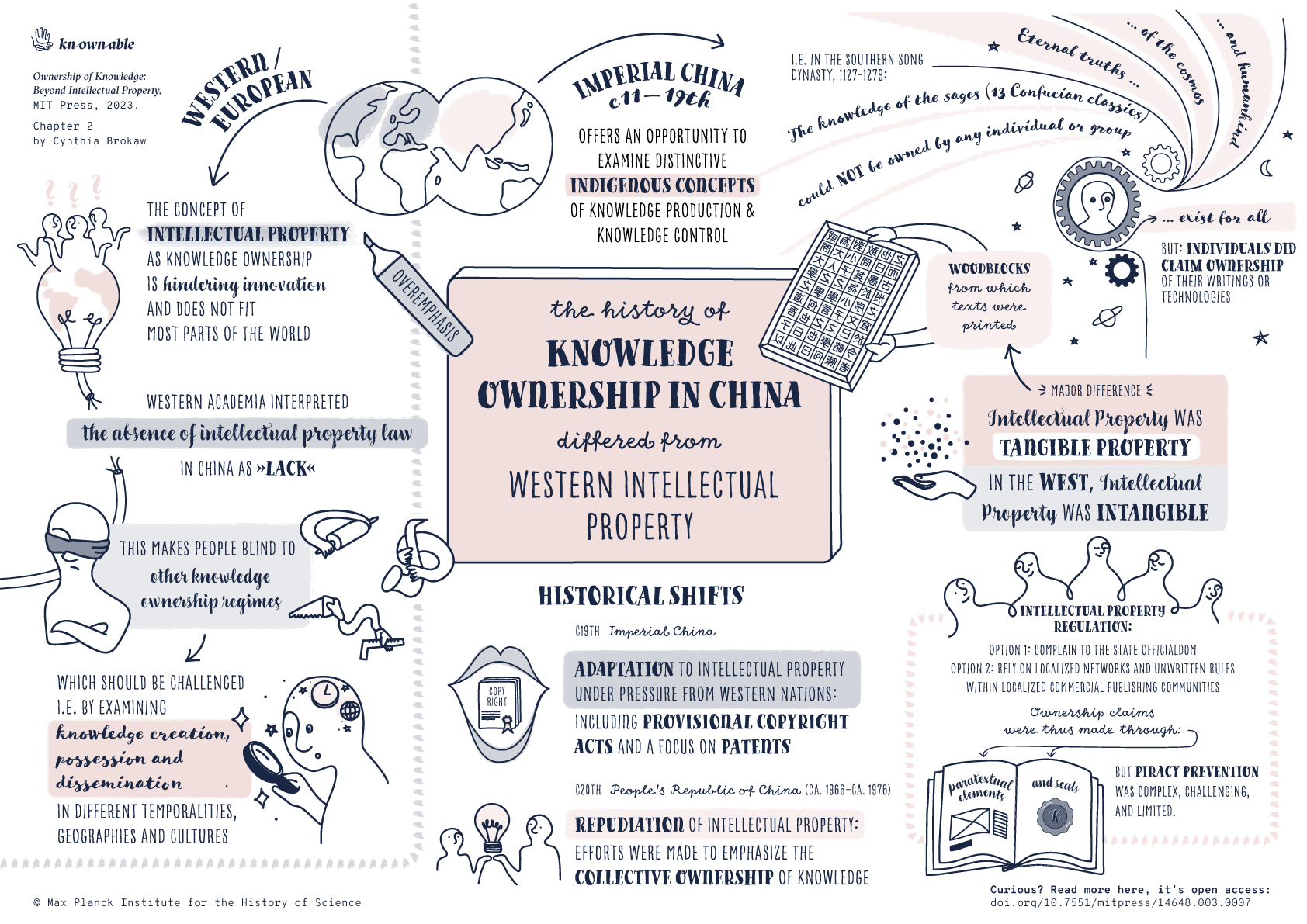
If you’re an author or inventor in Western society, you can own what you write or create. This is because of intellectual property laws—such as copyrights or patents—that define who owns knowledge or an invention. Intellectual property here is an intangible idea of knowledge ownership through words.
But it hasn’t always been this way. In imperial China knowledge was often owned not by individuals but collectively or by the state. Intellectual property was tangible, such as ownership of woodblocks for printing texts.
In her open-access chapter “Intellectual Property with Chinese Characteristics” Cynthia Brokaw challenges this (Western) concept of intangible intellectual property by examining tangible knowledge creation, possession, and dissemination in late imperial China.
Downloads
About the Sketchnotes Series
Our Sketchnotes series presents each open-access chapter of the book Ownership of Knowledge: Beyond Intellectual Property as an infographic.
Each Sketchnote is designed to present the concept in the chapter in visually, and can be used to introduce the topic to students, as a reading aid to the chapter, or while listening to the corresponding "Into the Kn/own" podcast episode.