
Names for Work: Crafts, Bureaucracy, and Law in Yuan and Ming China
By Dagmar Schäfer
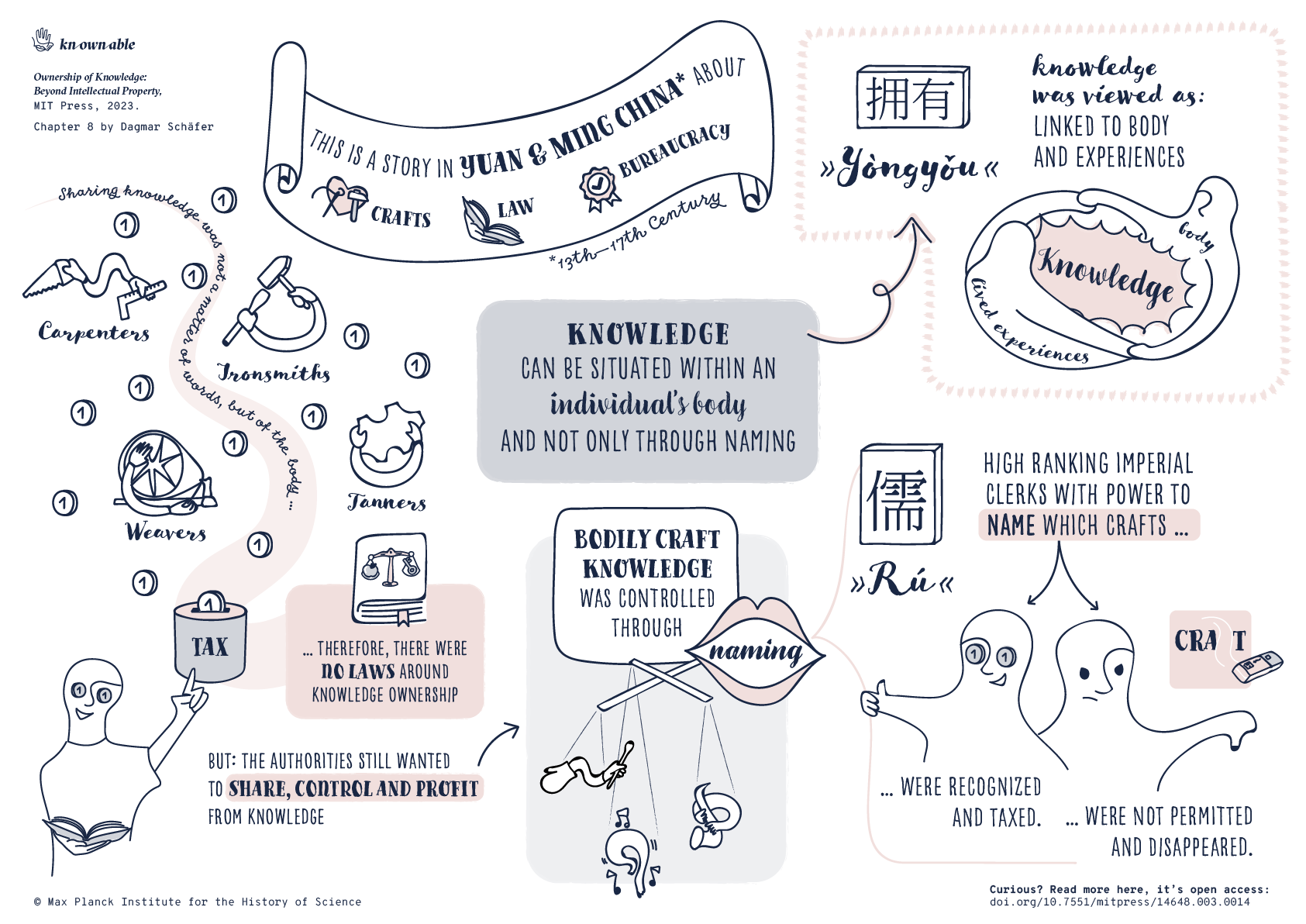
Owning knowledge through naming might be the most common kind of ownership. Going back to Yuan and Ming China, knowledge of crafts was tightly linked to the body and lived experiences. This knowledge became controlled through powerful clerks who would name the crafts, in doing so deciding which crafts were taxed and which were visible or not.
In her open-access book chapter “Names for Work: Crafts, Bureaucracy, and Law in Yuan and Ming China” Dagmar Schäfer explores how knowledge and its ownership can be established through power dynamics between authorities owning knowledge through naming and artisans owning knowledge through experience.
Downloads
About the Sketchnotes Series
Our Sketchnotes series presents each open-access chapter of the book Ownership of Knowledge: Beyond Intellectual Property as an infographic.
Each Sketchnote is designed to present the concept in the chapter in visually, and can be used to introduce the topic to students, as a reading aid to the chapter, or while listening to the corresponding "Into the Kn/own" podcast episode.