
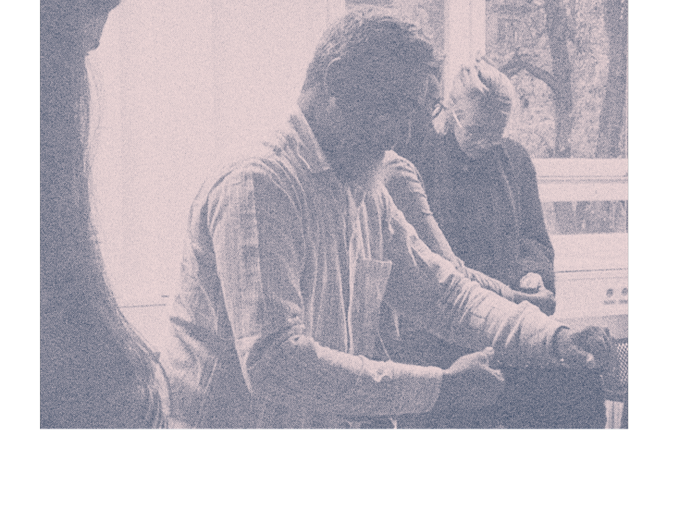
In Search of Kn/own/ables: Weaving and Dyeing as Knowledge Commons and Common Knowledge in India
An IMPRS workshop on reading Indian artisanal textiles using tie and dye techniques, natural dyes, and handloom weaves by Handloom Futures research collective for MPIWG scholars.
- Date: October 29–30, 2024
- Location: Max Planck Institute for the History of Science, Berlin
About the Workshop
In this workshop, fellows of the research collective Handloom Futures Trust presented handloom weaving and dyeing techniques in India as being part of a knowledge commons as well as common knowledge; where farmers, spinners, dyers, warpers, weavers, were perceived as knowledgeable practitioners [or researchers in their field].
Yet these practitioners had a problem of owning their knowledge, since it was not written down in texts. In order that we as scholars learned how to comprehend their expertise, in this workshop participants got the chance to engage with their research products, and learn how to read textile.
This workshop was also an invitation for each participant to present a case from their work, where knowledge and ownership had been split into knowing and owning; for example as science and intellectual property; or knowing how to dye indigo versus owning its formula.
Together with interested scholars we explored issues of appropriation of knowledge, or who thought about how to make knowledge ownership, either in their work, or in a particular knowledge ownership framework, beyond intellectual property.
Get to Know the Artisans
Dharmender Vaddepalli graduated in Fine Arts from the Jawaharlal Nehru Architecture and Fine Arts University, Hyderabad. He joined an NGO Dastkar Andhra, where he apprenticed with Uzramma in textile design. Over the next decade, he became the head of design in DAMA, a marketing body working with weaver co-operatives. He then set up Blue Lotus, to experiment with weaver entrepreneurs and build identity for local handloom designs. For this work, Blue Lotus won awards, for innovation of handloom denim and natural dyed Ikkat. Having successfully grown the institution over the next six years, he took over the running of Malkha, as it transformed from a marketing organization to becoming a Knowledge Commons. In three years, he built a team that is realizing Uzramma’s vision of connecting local farmers, spinners, dyers, weavers and customers, with commitment and dedication. He has presented his work at the Max Planck Institute for the History of Science in Berlin in 2022 as part of the research collective Handloom Futures.
Abdul Aziz Alimamad Khatri hails from a family of bandhani artists, a resist-dyeing technique, in Bhadli, Kutch. His grandmother’s and mother’s skilled hands taught him the fine tying and binding techniques of the traditional patterns. From his father, he learned the technical art of dyeing. In 1998, Aziz received a scholarship from the All India Handicrafts Board to study natural dyeing. In 2003, Aziz trained at the Ahmedabad Textile Industries Research Association, where he learned about water treatment, water conservation, environmental concerns and applications of all types of dyes. His studies continued in 2005-06, graduating in textile design from Kala Raksha Vidhyalaya (KRV). The family business ABABIL Bandhani By Design operates from Bhadli and supports numerous artisans. Aziz’s designs have been displayed at various prestigious museums including the Victoria & Albert. Aziz’s complex patterns are achieved by tying, folding, stitching and clamping the cloth multiple times and dyeing it in successive dye baths.
Vurugonda Odelu is a hereditary weaver from Kushnapally, Adilabad. He helped form a weavers’ sangam (co-operative society) in Chennuru which he sustained through collaborations with Uzramma, Dastkar Andhra (NGO) and governmental support. He got loans for six weavers to buy looms, so that they could own their means of production. He was recognized by the District Rural Development Agency as an expert in tussar pit loom silk weaving. Odelu trained in natural dyes under the eminent chemist, KV Chandramouli, and legendary indigo dyer, Kattubadi Yellappa. With Jagada Rajappa, he researched the use of local mordants for colour fastness in cotton. His vast knowledge of local materials, histories and processes helped to make the necessary intuitive leaps to understand the importance of curing mordanted yarn before dyeing it. He is almost the single surviving expert in setting up and maintaining an indigo vat for the production of indigo dyed yarn and fabric. He has also participated as a speaker in three international conferences of the Society of the History of Technology, in Kalakshetra, in Chirala and in the Meander Project. He is currently a fellow of the Handloom Futures Trust, a handloom research program, working at the site of Malkha’s production, to continue his research and teaching of natural dyes to future generations of dyers.
Visit: Handloom Futures
Learn more here: https://www.mpiwg-berlin.mpg.de/research/projects/ownership-knowledge-beyond-intellectual-property
Media Images
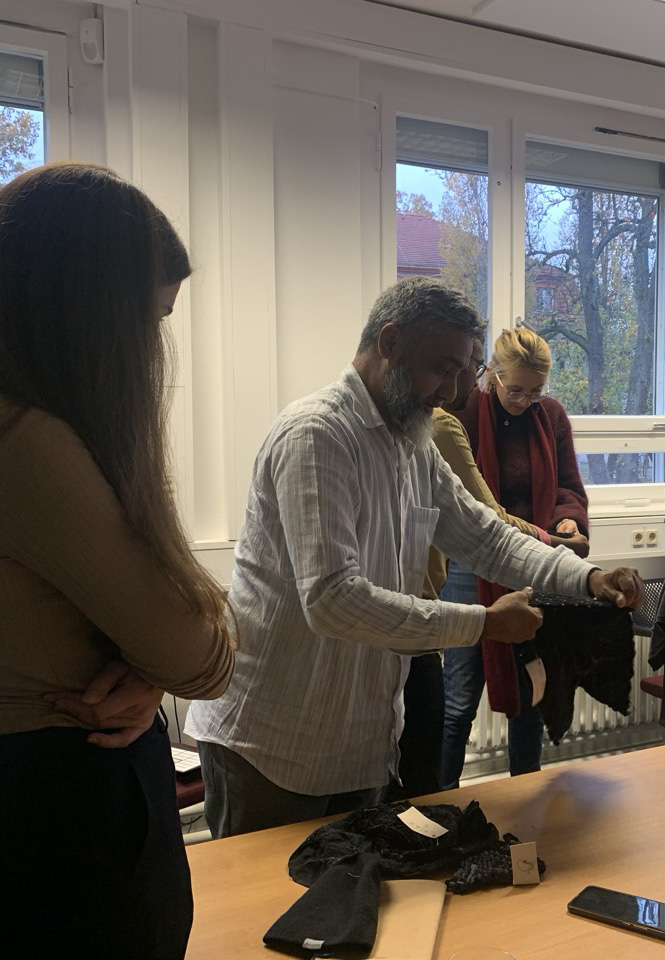
From the workshop, Abdul Aziz Alimamad Khatri showing a tie dye fabric
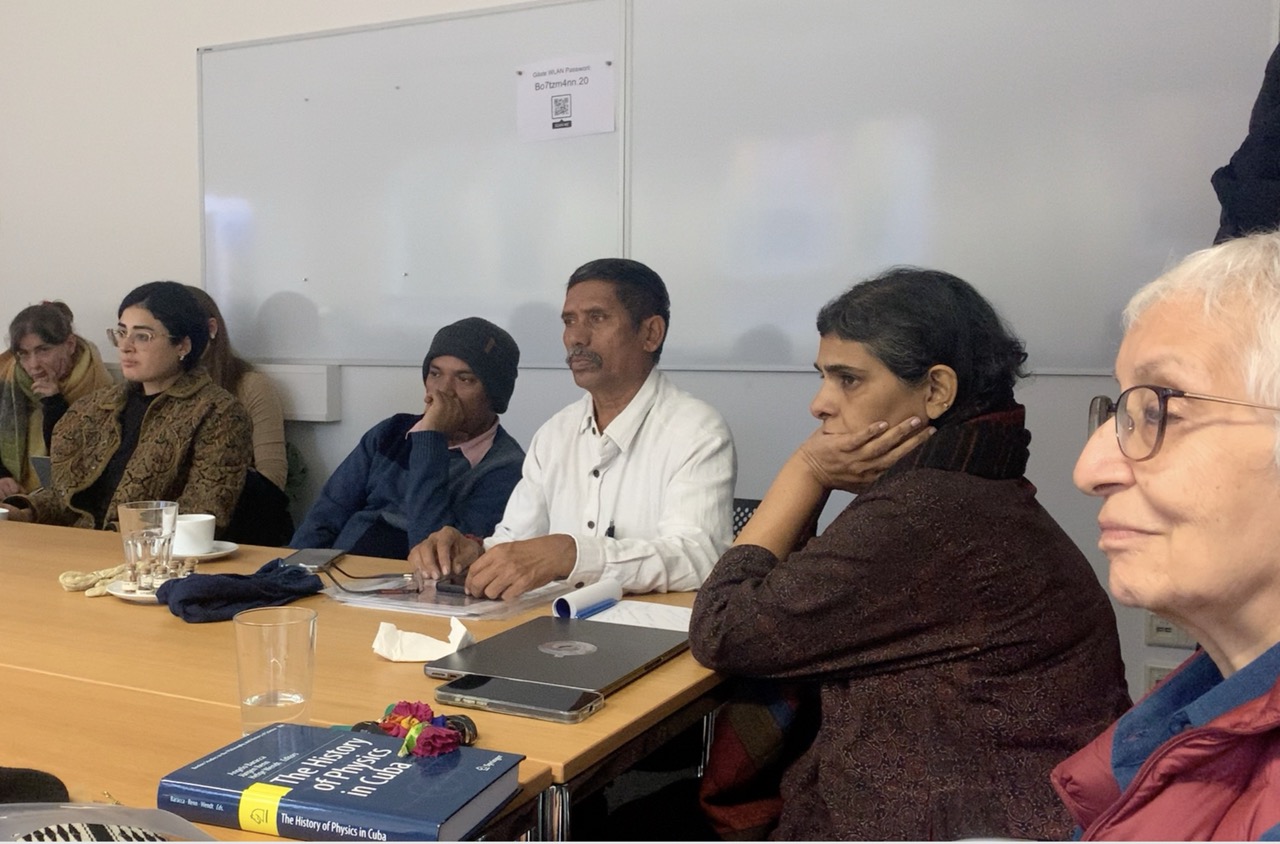
During the workshop, Annapurna Mamidipudi with Artisans Vurugonda Odelu and Dharmender Vaddepally
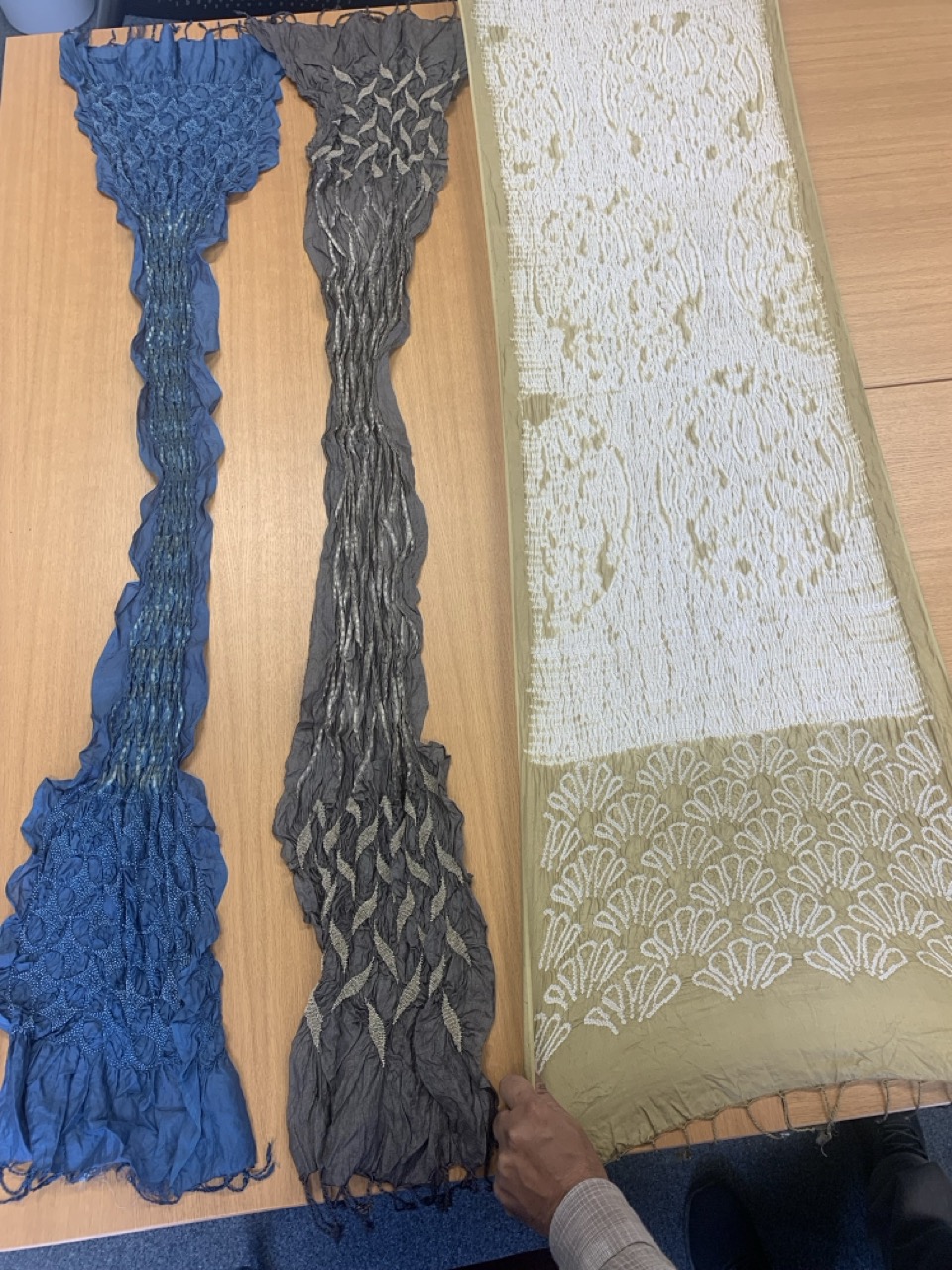
Shibori and Nagphani Tie Dye
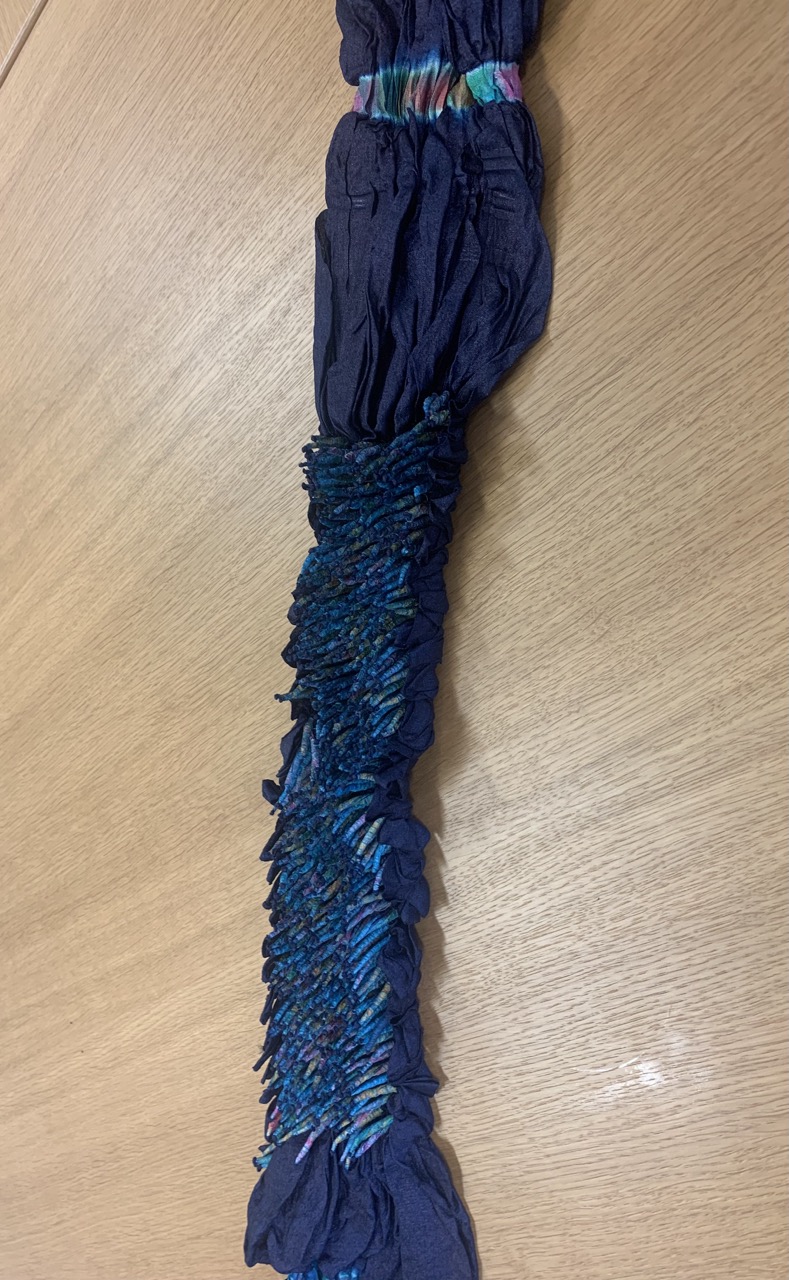
Kandho handpainted Bandhini
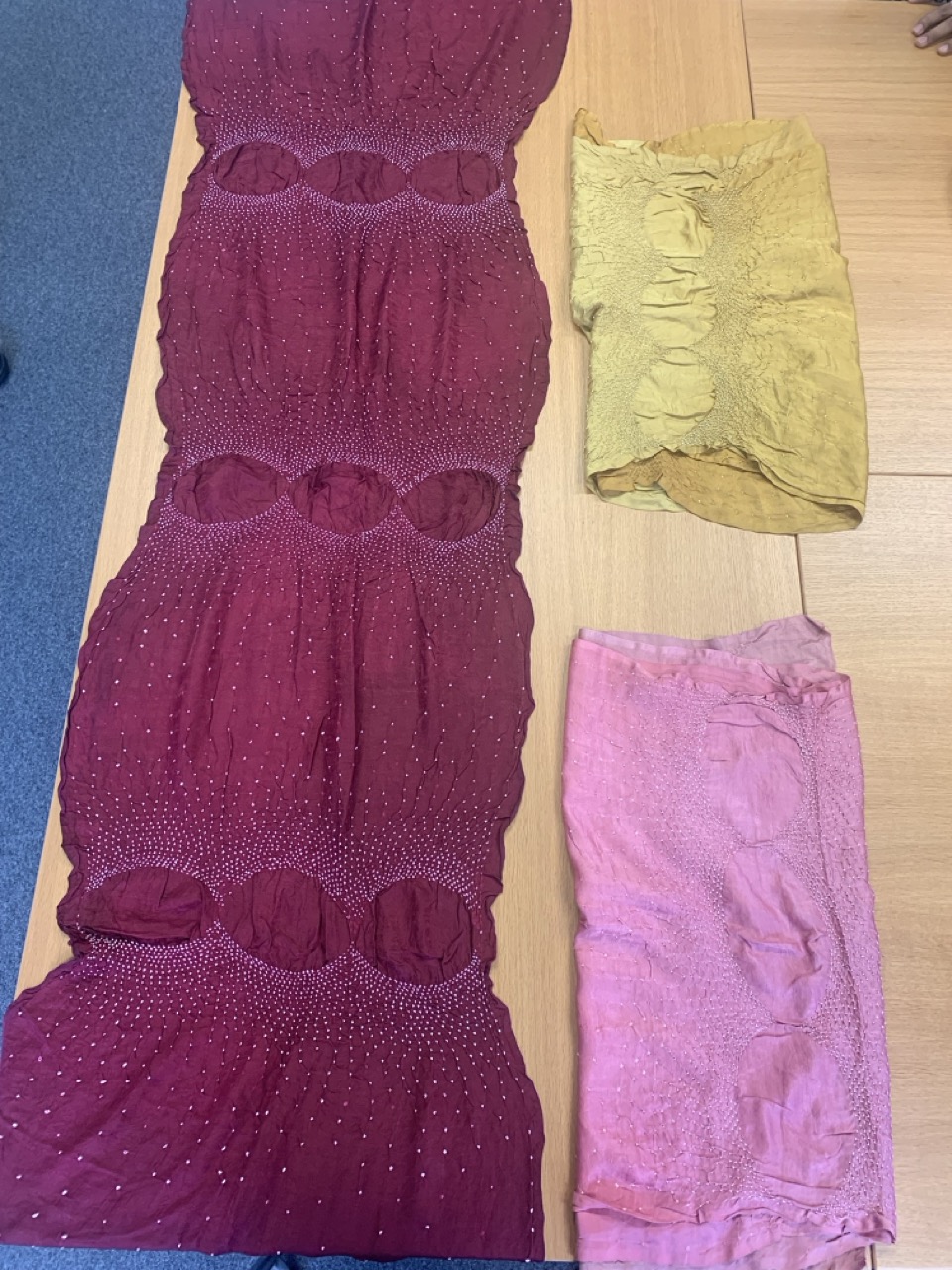
Natural Dyed Bandhini
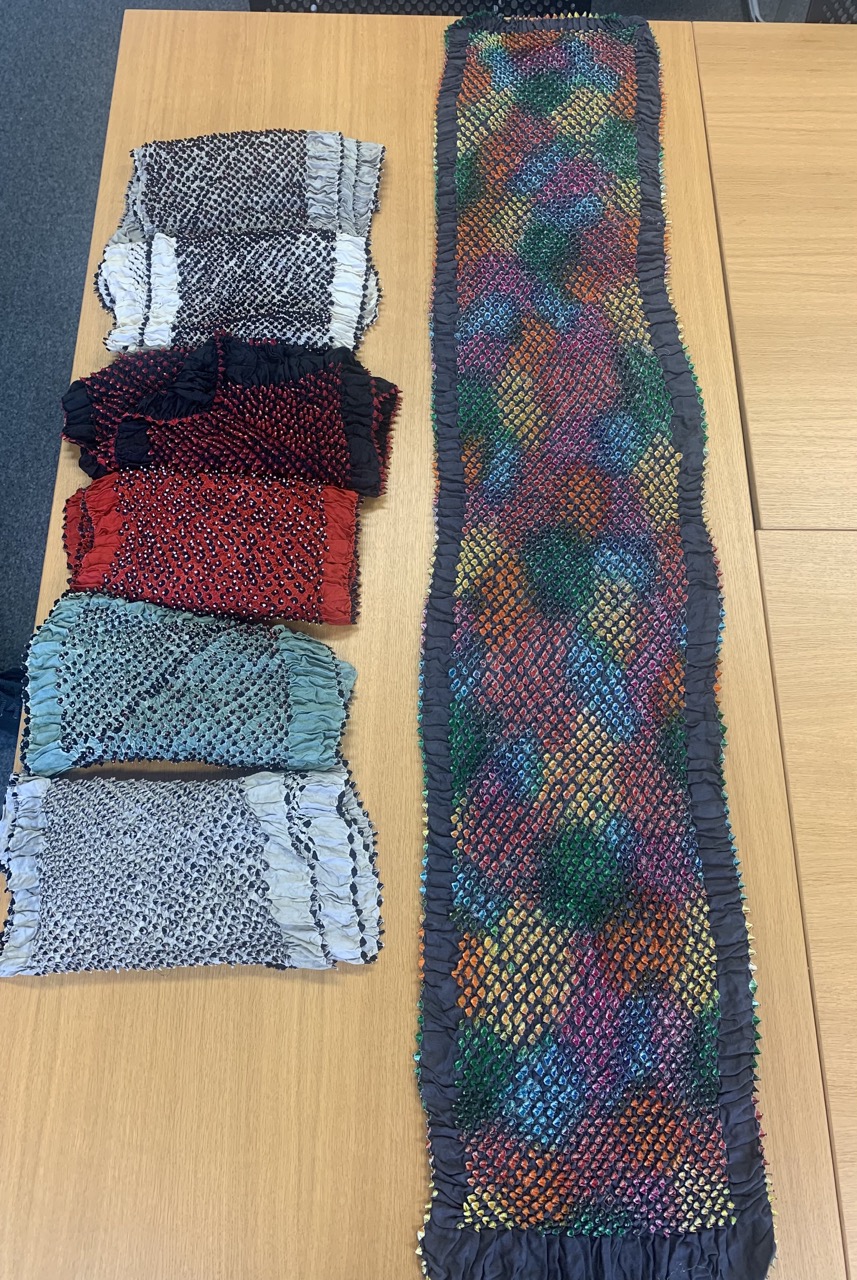
Multi Color Handpainted Bandhini
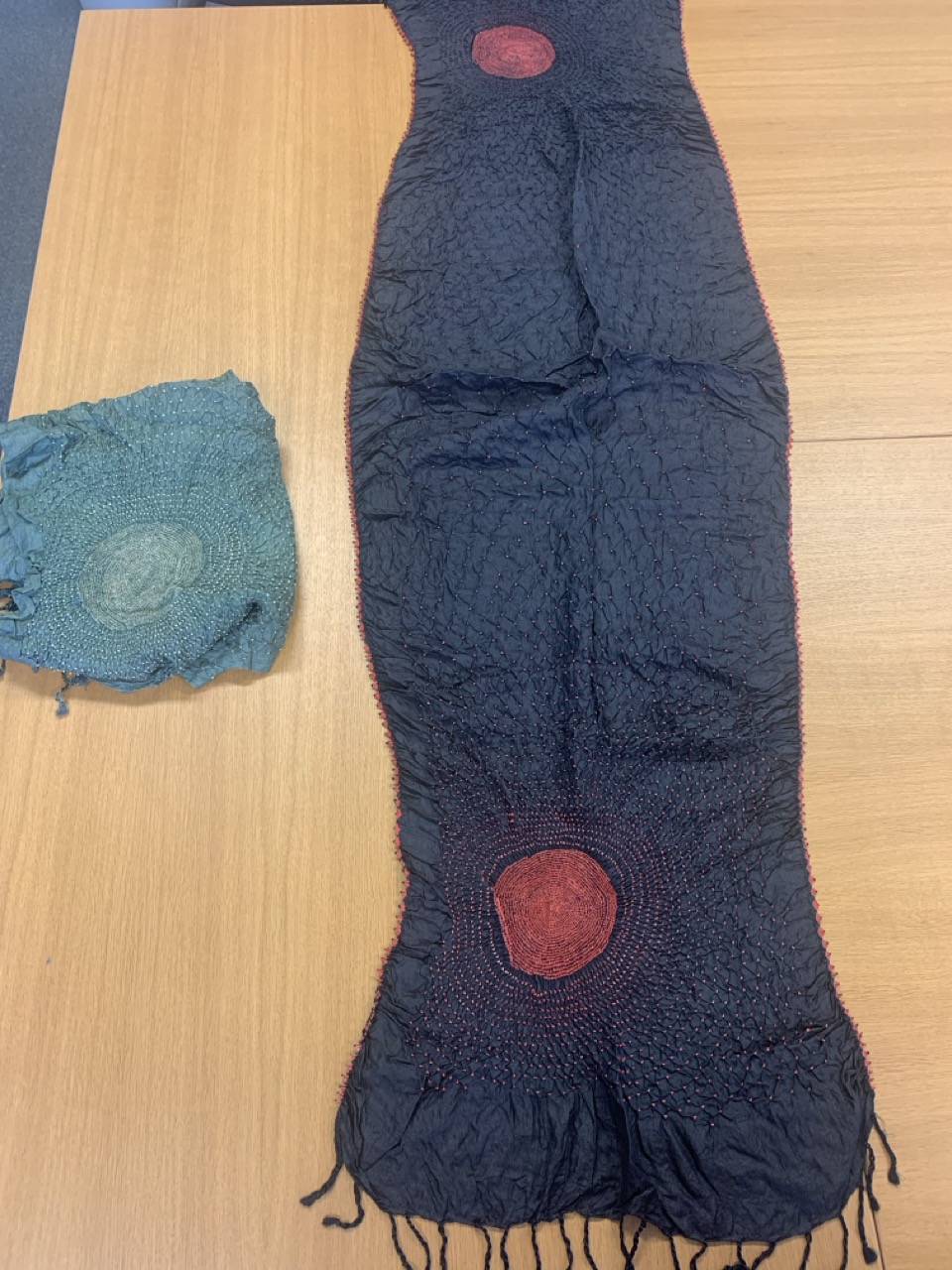
Kutch monsoon Bandhini
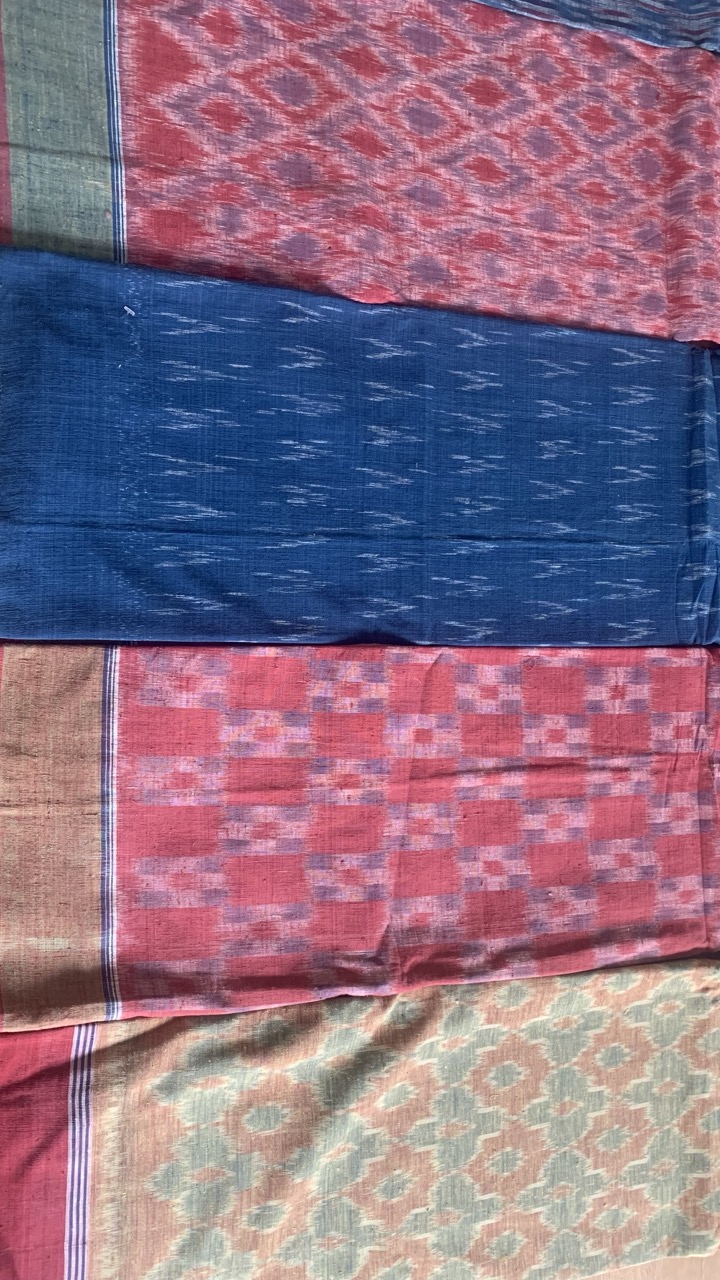
Malkha Natural Ikat Tiedye Weaves